Probate &
Estate Settlement
After someone dies, the mail keeps coming. A bank statement, an insurance bill, or a letter from a retirement plan can each raise a different question. Roberts Wealth Management can help you gather the financial records and work out which questions belong with the institution, your estate attorney, or your tax professional.
Before your first meeting
Start with the papers already in front of you
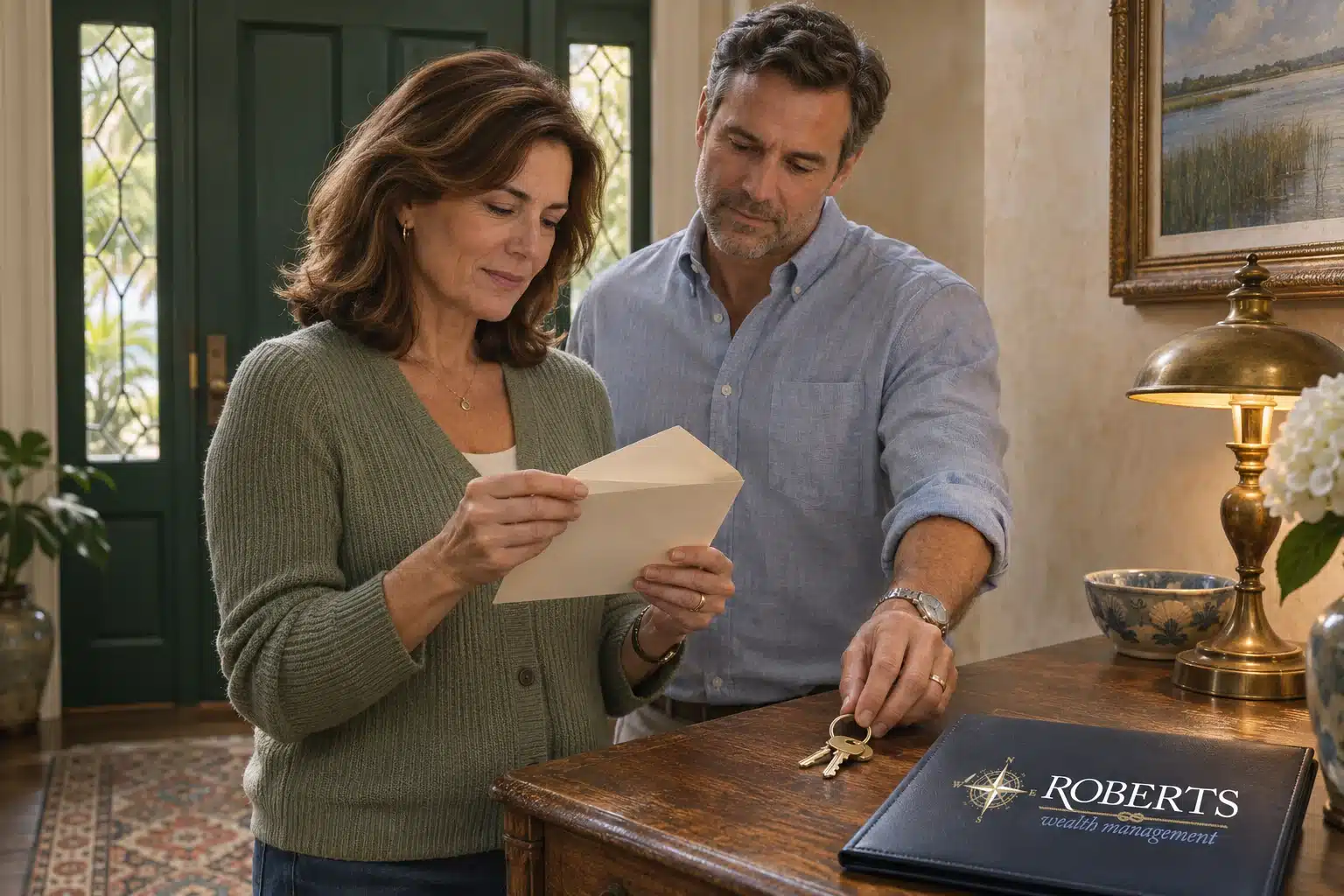
Choose one folder for the records you find and one sheet for open questions. If a notice has a deadline, put it at the top and flag it for the appropriate professional. You can bring the rest in stages.
When an institution asks for personal records, confirm its secure delivery method and whether it needs a copy or an original.
A family example
Three pieces of mail. Three different calls.
Imagine a brother and sister sorting their mother’s mail. They find two statements and a bill due next week. They start by writing down the name on each item, the contact number, and one question for the call.
- An IRA statement
- Ask the IRA custodian how it confirms the beneficiary on file and what it requires from a claimant. The person who receives the mail may be different from the person named on the account.
- A brokerage statement
- Copy the account title exactly as printed. Ask the firm’s estate team which records it needs to verify ownership, any transfer designation, and who may give instructions.
- A home insurance bill
- Note the due date and ask the insurer what information it needs about the property. Ask the estate attorney who has authority to arrange payment and which funds that person may use.
Your settlement team
Who can answer which question?
It helps to know whom to call for an account balance, a court notice, or a tax filing. Each professional brings a different piece to the conversation.
Your RWM advisor
We can help organize the financial records you bring, identify missing statements, and prepare questions for custodians. If you are a surviving spouse, we can also review how changes in income affect your own household budget.
Your estate attorney
Bring the will, the names on account statements, and any court notices. Ask whether probate or another procedure applies, who has authority to act, and which deadlines need attention.
Your tax professional
Bring prior tax returns if available, income documents, and a list of accounts. Ask which returns may be due for the person who died or the estate, and what date-of-death values or other records to request.
Questions families ask after a death
What is probate, and does every account go through it?
Probate is a court process for administering an estate. The account title, a valid beneficiary designation, and state law can affect how a particular asset passes. Ask each institution what its records show, then let your estate attorney determine which assets require a court process.
My parent named me executor in the will. What should I show the bank?
Tell the bank about the death and ask for its estate department’s document list. It may ask for a certified death certificate and court-issued proof of appointment. Your estate attorney can explain what authority you have and when you may act.
Does an incomplete set of records have to delay the first meeting?
Bring what you have. Even one statement can identify an institution to contact. A short list of missing items, people you have spoken with, and notices with due dates gives the meeting a useful starting point.
What does “succession” mean in Louisiana?
Louisiana uses the term succession for the legal process of transferring a person’s property after death. A Louisiana estate attorney can explain which procedure applies. Account titles, beneficiary information, and recent statements are useful records to gather for that conversation.
What’s the first question on your list?
Bring that question and the records you have. We’ll start there.
The family example is hypothetical. Legal procedures and tax obligations depend on the estate and state law. Your estate attorney and tax professional can advise on your circumstances. For planning during your lifetime, explore our Estate Planning Strategies.